

The brief
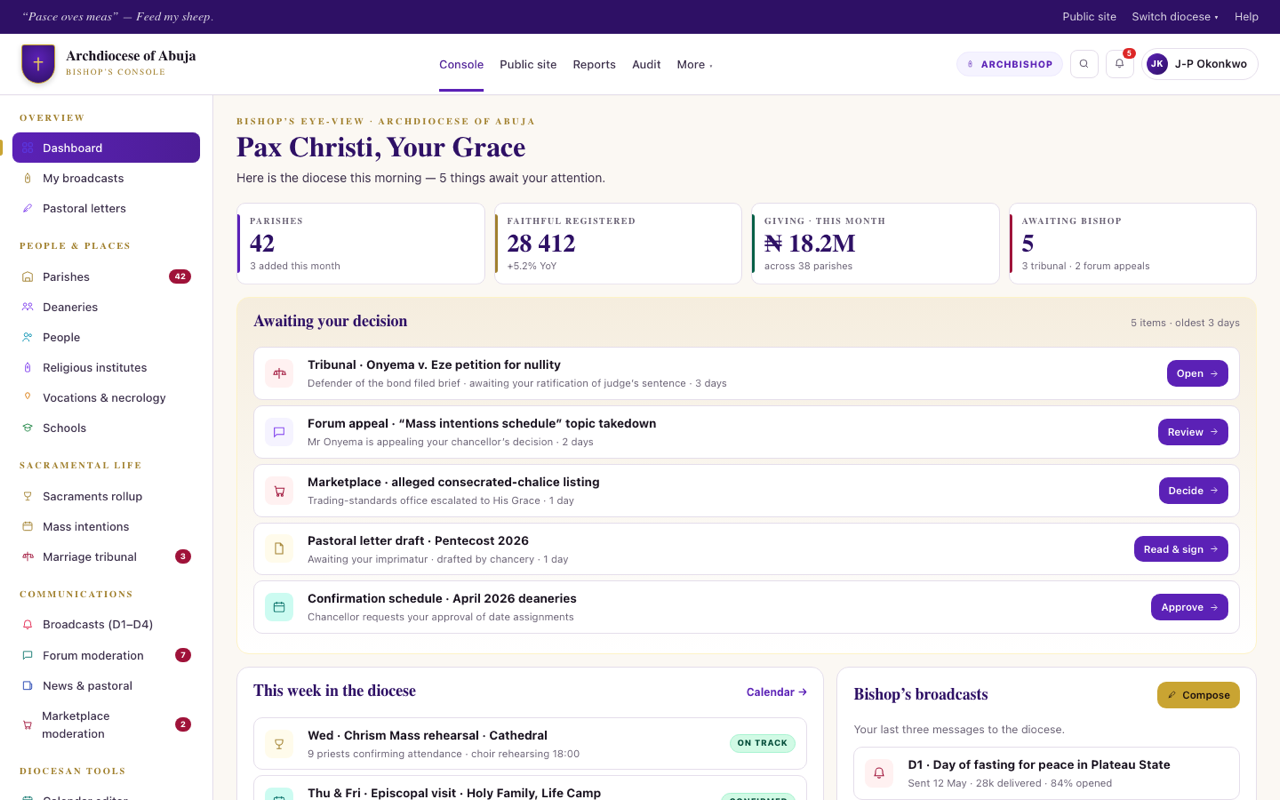
Parishes in West Africa rely on paper registers, group chats, and disconnected spreadsheets. Sacraments get recorded twice. Mass intentions get lost. Finance teams cannot reconcile contributions against the calendar. Dioceses cannot see what is happening across their territory until somebody drives there.
EcclesiaOne came to us with a 200-page master spec covering everything from baptism records to vocations tracking, and one constraint that shaped every decision: it had to work for a parish with a single laptop and a 3G dongle.
What we built
One platform, three surfaces, one data model. The diocesan command center runs on desktop where bandwidth is reliable. The parish portal lives on the web so any priest with a browser can use it. The mobile app gives parishioners a daily prayer life, mass intention booking, contribution history, and a tap to confess.
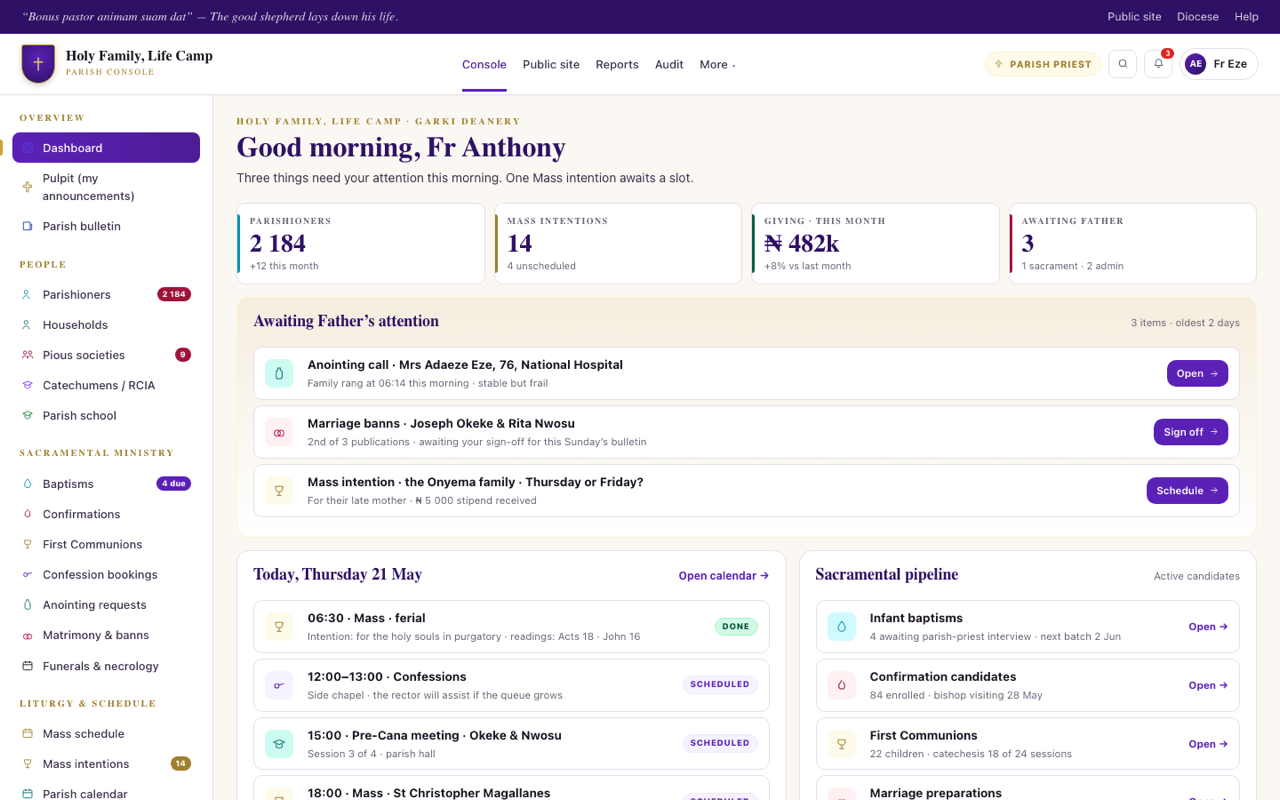
Hierarchy mirrors the Church: diocese owns parishes, parishes own pious societies, societies own their members and content. Every permission flows through a role-based and attribute-based engine so a parish secretary can record a baptism but cannot publish a bishop circular, and a society lead can broadcast to members but cannot see another society's finances.
The seven sacraments, digitised
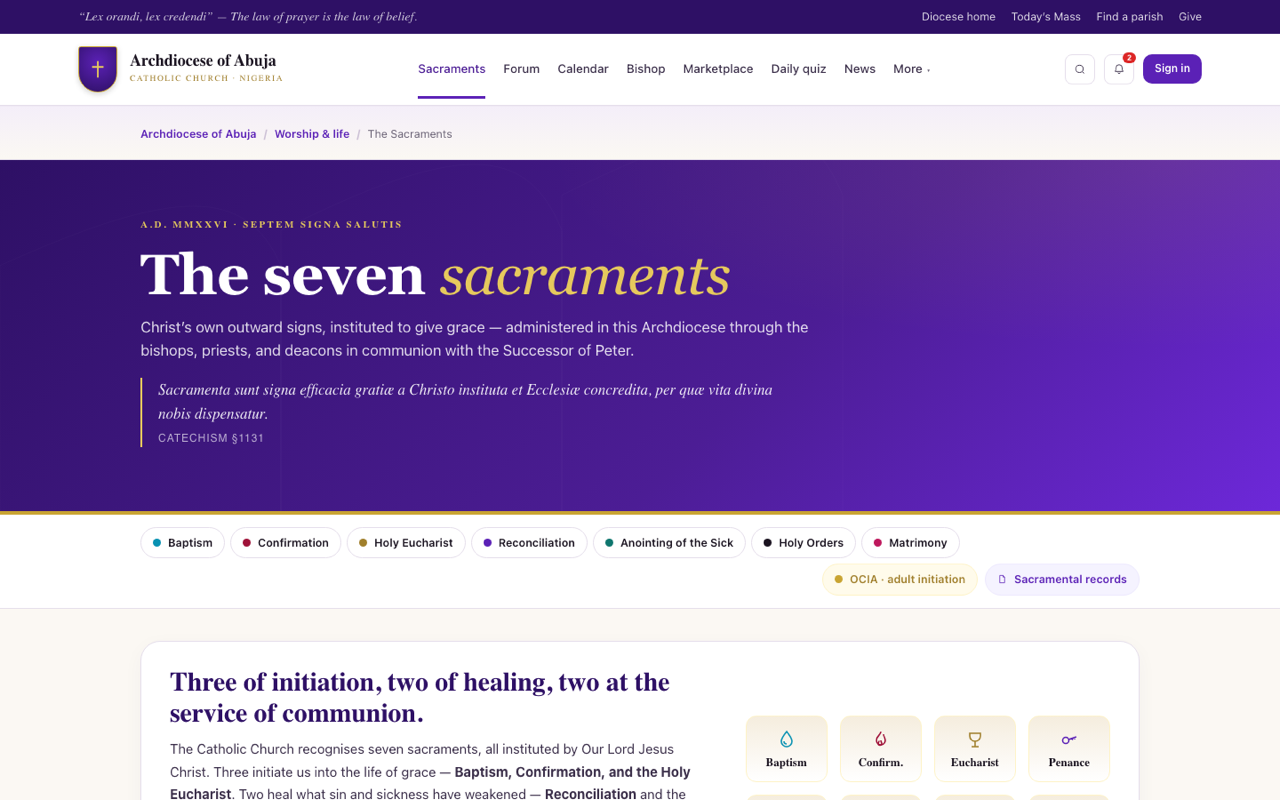
The hardest module was sacramental records. Canon law requires permanent retention, signed authority, exportable certificates, and cross-parish lookups (proving a baptism for a wedding, confirming a marriage for an annulment). We built a registry that treats each sacrament as a first-class record class with its own lifecycle, witness fields, and certificate template.
A diocesan calendar that mirrors the universal Church
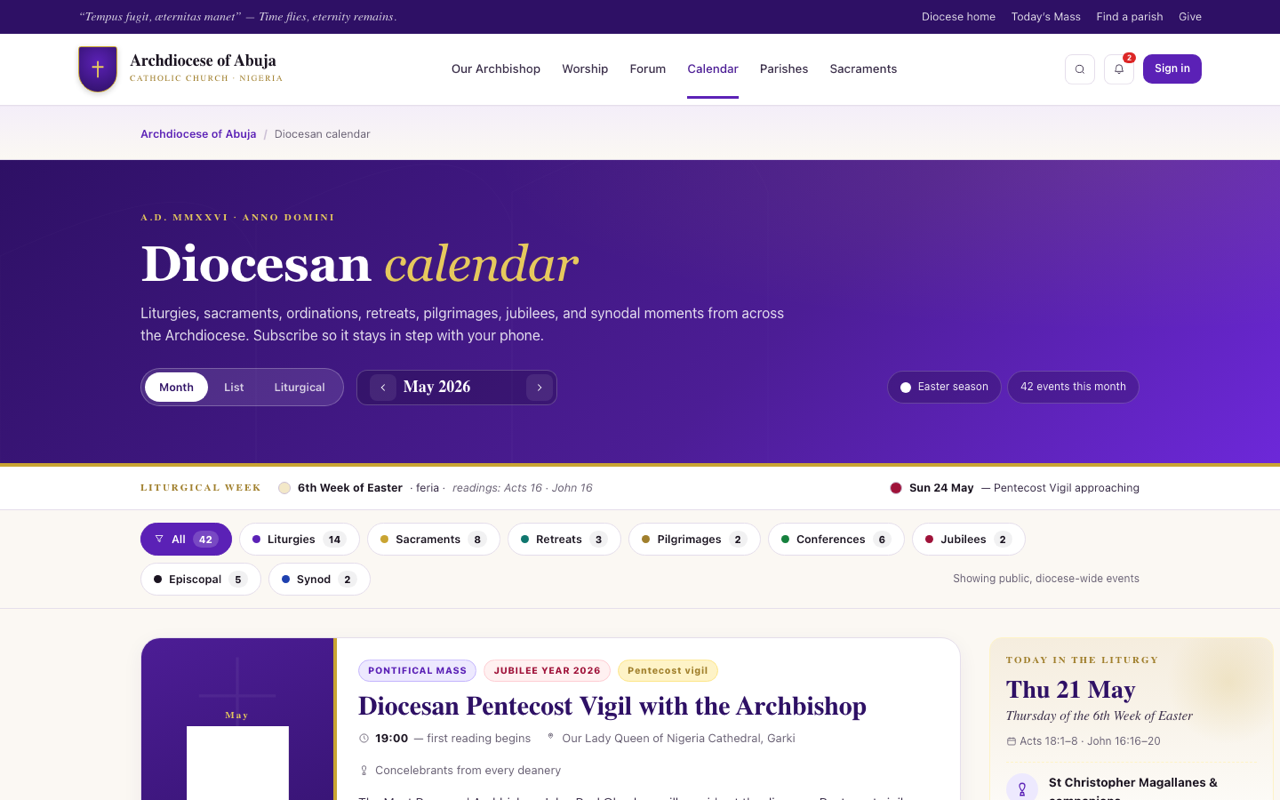
Liturgical time is its own data layer. The platform syncs to the universal calendar, layers in proper feasts for each diocese, and surfaces mass intentions, pilgrimages, ordinations, and synods on the same view. Parishes feed events upward, the diocese can broadcast downward, and every event carries the canonical references needed for the bulletin.
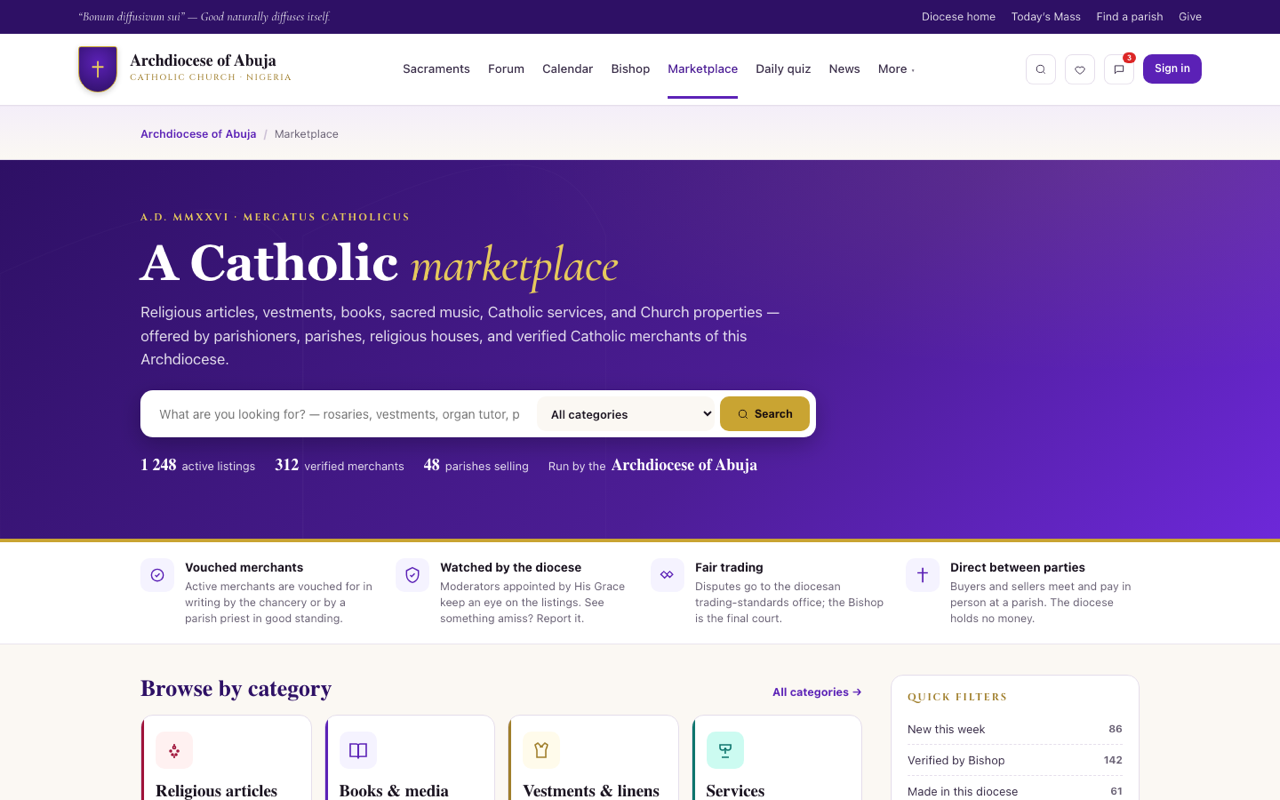
Marketplace, because parishes are also economies
Parishes sell religious articles, books, services, sacred music, vestments, and verified Catholic property. EcclesiaOne includes a vetted marketplace where every seller is endorsed by the diocese, payments clear into the parish or society account, and disputes route through a Church-trusted moderation layer.
Offline-first because bandwidth is not a given
The desktop client maintains a local replica of every record the parish needs. A sync queue ships changes when connectivity returns. A priest in a rural parish can run mass, record sacraments, take confession bookings, and reconcile the collection without an internet connection. When the dongle reconnects, conflicts resolve through a last-writer-wins with audit trail strategy, with a manual override for sensitive fields.
The modules
- Sacraments & records: baptism, confirmation, marriage, holy orders, anointing of the sick. Every record signed, dated, and exportable as a canonical certificate.
- Membership, family & household: household clustering, godparent linkage, society membership, contribution attribution.
- Finance & stewardship: envelope giving, project funds, vendor management, monthly reconciliation against the liturgical calendar.
- Mass, events, intentions: liturgical calendar synced to the universal church, mass intention booking with payment, event RSVPs.
- Pious societies: each society gets its own branded sub-portal inside the parish space.
- Communications: WhatsApp, SMS, email, push. Broadcasts can target a diocese, parish, society, or any custom segment.
- Pastoral care: confession booking, counseling slots, prayer requests, charity tracking.
- Marketplace: diocese-vetted sellers, fair-trade Catholic commerce, escrow-style payouts.
- Media & live streaming: homily archive, live mass, sermon library.
- Vocations: seminarian tracking from candidacy through ordination.
Compliance was non-negotiable
Three regimes had to hold at the same time: Nigeria's NDPA for personal data, the EU's GDPR for European visitors and contributors, and canon law for sacramental records. We chose EU-hosted Postgres for residency, built granular consent into the membership flow, and treated sacrament records as a separate retention class with permanent storage and a dedicated audit log.
How it looks today
EcclesiaOne is in pilot with the first wave of parishes. The platform was specced from the start as investor and diocesan reference, and the engineering reference document we co-authored runs to 300+ pages of architecture, data model, and operational runbooks.